Most cleaning companies quote a manufacturing building the way they'd quote an office: square footage times a rate. Then they show up, discover a production floor with housekeeping boundaries they can't cross, a break room that serves three shifts, a warehouse with racking they can't reach, and dock doors that stay open in January — and the scope falls apart in the first week.
An industrial facility is a genuinely different cleaning problem. It runs on a different clock, answers to a safety program the office doesn't have, and mixes clean-office space with heavy plant space under one roof. Here's what actually changes, and what a scope has to account for before the number on it means anything.
Why a plant isn't just a bigger office
In an office, the whole building is one environment. In a manufacturing or distribution facility, you're cleaning several environments at once, and each has its own rules. The front admin offices want an office-grade clean. The production floor has a line between what your crew maintains and what plant staff handle for safety and quality reasons — and crossing it wrong can contaminate a process or trip a lockout. The warehouse is mostly concrete, dust, and forklift traffic. The break rooms and locker rooms take the load of an entire shift changeover, several times a day.
A vendor who treats all of that as one number is quoting a building they haven't understood yet. The walkthrough is where an industrial quote is really built.
The zones an industrial scope has to cover
A scope that holds up separates the building into zones and states what happens in each, how often, and where your crew's responsibility stops and plant staff's begins.
- Administrative and office areas — desks, conference rooms, and reception cleaned to office standards, usually the most frequently serviced zone.
- Restrooms, locker rooms, and break rooms — sized to shift headcount, not floor area. A building that runs three shifts turns these over far more than square footage alone suggests.
- Production floor housekeeping — the clearly drawn boundary between janitorial and plant-managed cleaning, so nothing that affects safety or product quality is ambiguous.
- Warehouse, racking, and dust control — aisle sweeping or scrubbing, and dust management on a schedule that keeps it from building up on product and fixtures.
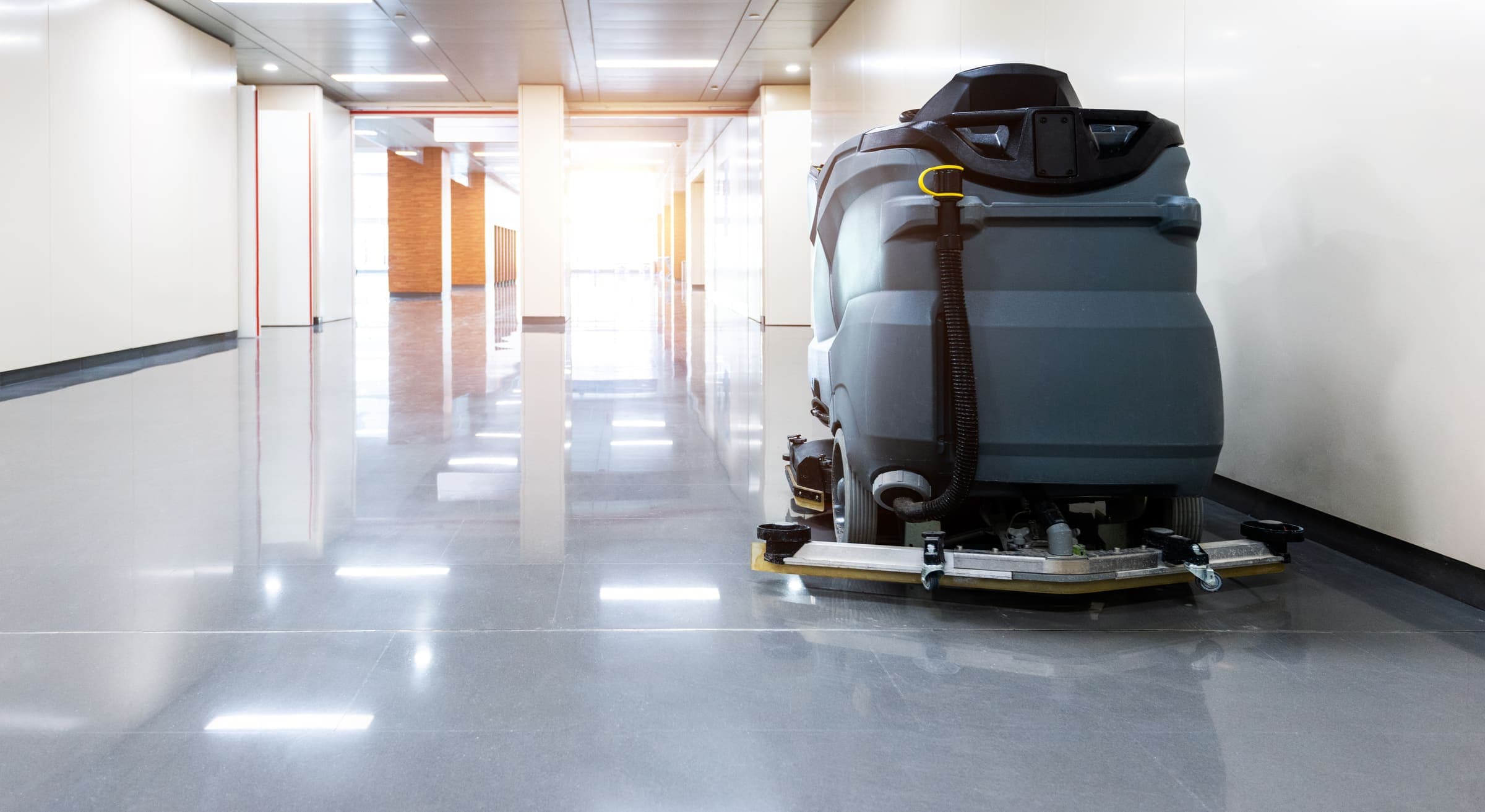
- Loading docks and concrete floors — the high-traffic, high-grime zones that need machine scrubbing rather than a mop and set the tone for how the plant reads as 'clean.'
The schedule is the hard part, not the cleaning
A single-shift office empties out at 6 p.m. and the crew has the building. A plant running two or three shifts never fully empties, and cleaning has to happen around live operations — during a shift, in the gap between shifts, or on a weekend maintenance window.
That means the crew has to be comfortable working near equipment and forklift traffic, and the schedule has to be built around your actual shift pattern instead of a generic after-hours slot. This is exactly why a local team matters: coordinating a scope this specific with a distant call center is where service breaks down. A named primary contact who knows your shift calendar can adjust in a phone call, not a support ticket.
Safety and compliance are part of the scope, not an add-on
In an industrial building, the cleaning crew is part of your safety environment. A vendor who treats that as an afterthought is a liability on your floor. Before you sign, confirm the basics:
- Crews briefed on your site safety rules, PPE requirements, and any restricted or lockout areas.
- Awareness of housekeeping's role in slip-and-fall prevention and, where relevant, combustible-dust standards.
- Proper handling and separation of the building's waste streams, including anything that can't go in general trash.
- Full insurance — general liability, auto, umbrella, and workers' compensation — with your organization named as additional insured and a certificate available before the first shift.
What actually drives an industrial cleaning quote
Industrial pricing is built around the building and how it runs, not a flat per-foot rate. The main drivers are the number of shifts and how much cleaning has to happen around live operations; the mix of office space versus plant and warehouse space; the amount of hard concrete floor that needs machine scrubbing rather than mopping; restroom, locker-room, and break-room counts relative to headcount; and any dust-control or specialty needs the process creates. Concrete sealing and floor machine work are usually scoped as their own line so you can plan them on a rotation. We walk the plant, map the zones with you, and price it to how the building actually operates.
The manufacturers who end up happy with their cleaning vendor aren't the ones who found the lowest per-foot number. They're the ones who made the vendor walk the plant, draw the zone boundaries, and prove they understood the shift schedule before anyone quoted a dollar. That's the walkthrough worth insisting on.