"How often should we deep clean the office?" is one of the most common questions we get from Salt Lake facility managers — and the honest answer is that it's really two questions wearing one coat. Day-to-day cleaning and deep cleaning are separate jobs on separate schedules, and confusing them is how buildings end up looking tired even though the crew shows up every night.
This is a practical breakdown of how often each deep-cleaning task actually needs to happen for a typical office on the Wasatch Front — plus the building-specific factors that move those numbers, and the Utah-specific reasons a deep-clean schedule matters more here than people expect.
Daily cleaning vs. deep cleaning — they're not the same job
Nightly (or several-nights-a-week) cleaning is about presentability: trash and recycling, restrooms, breakrooms, vacuuming, mopping, glass, and high-touch surfaces. It keeps the building ready for the next morning. Done well, nobody notices it happened.
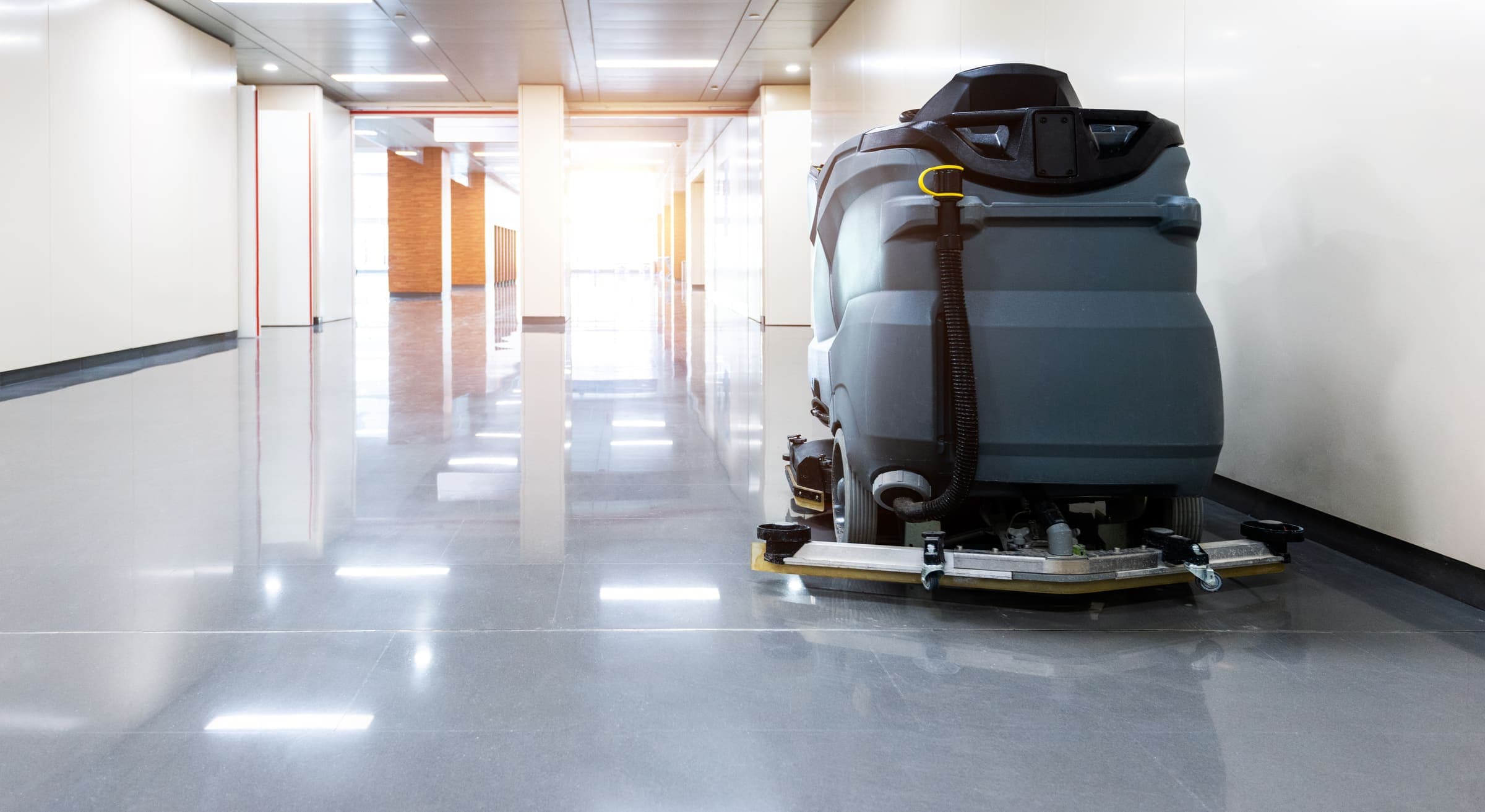
Deep cleaning is about restoration and longevity — the periodic work that resets a surface rather than maintaining it. Carpet extraction pulls out the soil a vacuum can't reach. Hard-floor strip-and-wax or burnishing brings back a finish that daily mopping only holds. High dusting, vent and light-fixture cleaning, and full restroom deep cleans handle the buildup that accumulates too slowly to catch on a nightly pass.
Skip the deep-cleaning layer and the daily crew fights a losing battle: carpets grey out, floor finish dulls, and the building looks worn no matter how faithfully the trash gets emptied. The two schedules work together — one maintains, the other resets.
A realistic deep-cleaning cadence for an office
There's no single right frequency — it depends on your building, which we'll get to — but these are the ranges most Salt Lake offices land in for each type of deep-cleaning work. Think of them as starting points a walkthrough would tune, not fixed rules.
- Carpet extraction (hot-water/steam): roughly quarterly to semi-annually for general office areas, and more often for lobbies, corridors, and other high-traffic paths that soil far faster than private offices.
- Hard-floor care (strip-and-wax on VCT, burnishing, polishing): burnishing on a monthly-to-quarterly rotation to hold the shine; a full strip-and-wax typically once or twice a year depending on traffic and finish wear.
- High dusting — vents, ledges, light fixtures, tops of partitions and cabinets: quarterly for most offices, more often in dustier environments or where air quality is a concern.
- Restroom deep cleaning (descaling, grout, full fixture and floor detail beyond the nightly service): monthly to quarterly, on top of the daily restroom service.
- Interior windows and glass partitions: quarterly is common; open-plan and glass-heavy tech offices often want it more frequently because every smudge shows.
- Upholstery and soft-seating extraction in lobbies and shared areas: annually for most offices, semi-annually where seating gets heavy public use.
What makes your building need it more often
Two offices the same size can be on very different deep-cleaning schedules. The things that push the frequency up are all about how hard the building gets used and what it's finished with:
- Foot traffic and headcount. A packed floor, a client-facing lobby, or a building with heavy public visitation soils carpet and floors far faster than a quiet back office.
- Carpet-to-hard-floor ratio. More carpet means more extraction; more VCT and polished floor means more burnishing and strip-and-wax on the calendar.
- Ground-floor and entry areas. Lobbies and the first twenty feet inside every door take the most abuse — grit, moisture, and tracked-in debris concentrate there and often need their own accelerated schedule.
- Food and breakroom areas. Kitchens, cafés, and shared eating spaces generate grease, spills, and odor that need periodic deep work beyond the nightly wipe-down.
- Air quality and dust sensitivity. Offices with allergy-sensitive staff, server rooms, or fine-particulate concerns benefit from more frequent high dusting and vent attention.
- First impressions matter to your business. A professional-services firm or a showroom-adjacent office where clients walk in daily simply can't run the same relaxed cadence as an interior operations floor.
The Salt Lake factor: winter salt and summer dust
Utah adds two seasonal pressures that make a deep-clean schedule matter more here than in milder, cleaner climates — and both hit the floors and entryways hardest.
In winter, ice-melt and road salt get tracked straight through every entrance. Salt is abrasive and it's chemically hard on floor finish and carpet fiber; a building that doesn't step up entry-area care from roughly November through March will show white residue lines, dulled finish, and prematurely worn walk-off zones by spring. Many Salt Lake offices tighten their lobby and corridor extraction cadence for exactly this window.
In summer — and during the valley's inversion episodes — fine airborne dust and particulate settle onto ledges, vents, partitions, and hard surfaces faster than you'd expect. That's what drives the case for keeping high dusting and vent cleaning on a real rotation rather than an afterthought. The mountains are beautiful; the dust they send down is not.
Signs your office is overdue
If you're not sure whether your deep-clean schedule is keeping up, the building will tell you. Watch for:
- Carpets that look flat, grey, or darkened along the main walking paths even right after a nightly vacuum.
- Hard floors that have gone dull and won't come back with mopping, or visible traffic lanes in the finish.
- White salt residue or gritty entryways lingering through the winter months.
- Dusty vents, ledges, and light fixtures, or a persistent stale feel to the air.
- Restrooms that look clean at a glance but have scale buildup, discolored grout, or lingering odor.
- That general "tired" look — nothing dirty exactly, but the space no longer photographs the way it used to.
Build deep cleaning into the contract, not the emergencies
The offices that stay consistently sharp don't order deep cleaning reactively when something looks bad — they build it into the scope from the start. A good vendor maps the periodic work onto a rotation: which tasks happen monthly, quarterly, semi-annually, and annually, so it's scheduled and budgeted rather than a scramble.
Ask any vendor to separate the recurring nightly base from the periodic deep-cleaning rotation in writing. That way you can see exactly what's included, adjust frequencies to your building's real traffic, and never get surprised by either a worn-out floor or a surprise line-item. The nightly crew keeps the office presentable; the rotation keeps it from wearing out. You want both on the calendar.